
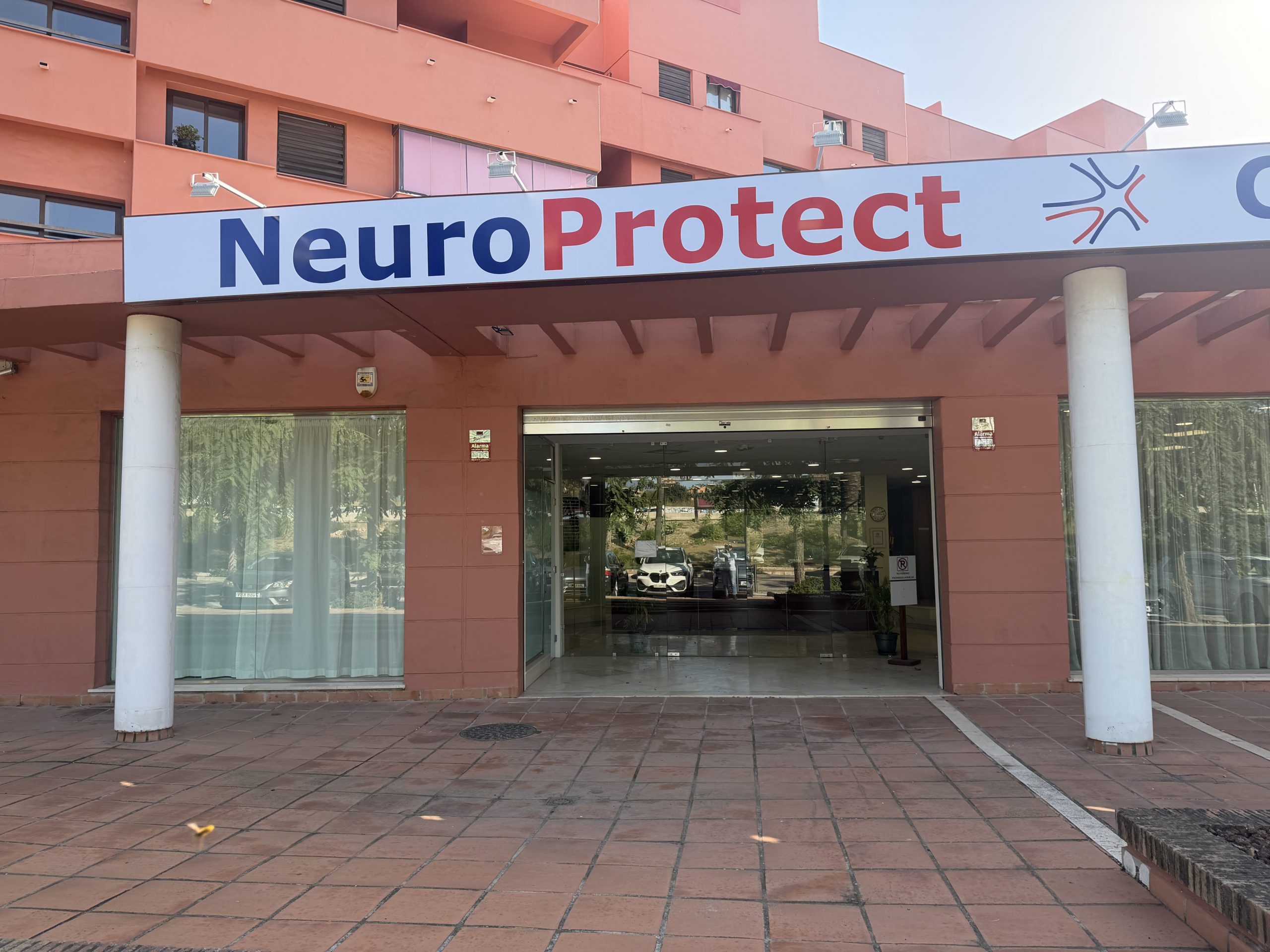
Speech and language therapy for children, adults and older people in Estepona
Speech and language therapy assesses and treats disorders of communication, language, speech, voice and swallowing. At NeuroProtect you will be seen by Ángela Cuervo Gómez, a speech and language therapist with more than 25 years’ experience, with a special focus on people with neurological conditions and working closely with the rest of the clinic’s team.
What we treat
- Language and speech difficulties in children and adults
- Reading and writing difficulties
- Stammering
- Voice disorders: hoarseness, vocal fatigue or a weak voice
- Swallowing difficulties (dysphagia), with a risk of choking
- Orofacial myofunctional therapy for breathing, swallowing and tongue posture
- Language problems after a neurological injury, such as aphasia after a stroke
- Speech, voice and swallowing problems in Parkinson’s and other neurological conditions
Come and see us if your child is not talking like other children of their age, if you struggle to find words or make yourself understood, if your voice has changed, or if you cough or feel you are choking when eating or drinking.
How we work
- Full assessment of language, speech, voice or swallowing, depending on the reason for your visit.
- Individual plan with clear goals, tailored to each person's age and situation.
- One-to-one sessions with practical, progressive exercises.
- Home exercises and guidance for the family, to keep making progress between sessions.
- Neurolinguistic approach for patients with neurological damage.
- Coordination with neurology, paediatrics and occupational therapy when needed.
Book your appointment now
Speech therapy in neurological conditions
After a stroke, people may have difficulty speaking, understanding, reading or writing (aphasia), or articulating words (dysarthria). In Parkinson’s disease the voice often becomes quieter and more monotonous, and swallowing can become harder. In multiple sclerosis, ALS (motor neurone disease) or dementia, speech and swallowing can also be affected.
Speech and language therapy helps people recover or maintain communication and eat and drink safely, reducing the risk of choking and pneumonia.
A coordinated team
- Neurology for diagnosis and treatment of the underlying condition
- Occupational therapy for independence in everyday life
- Paediatrics to monitor language development in children
Sharing information between professionals means treatment can be adjusted at every stage.
Speech therapy for children
Every child develops at their own pace, but some signs are worth checking: not saying single words by around 18 months, not putting two words together by age 2, being very hard to understand at age 3, persistent stammering, or difficulty learning to read and write. An early assessment means we can step in at the best time.
Dysphagia: when swallowing becomes difficult
Coughing when eating or drinking, feeling food stuck in the throat, taking a long time over meals or losing weight for no reason can all be signs of dysphagia. It is common in older people and in neurological conditions. A speech therapy assessment allows us to adapt food textures, teach safe postures and exercises, and help you eat more safely.
Look after your voice
- Drink water throughout the day.
- Avoid shouting and talking in very noisy places.
- Take breaks if you use your voice a lot at work.
- See a specialist if hoarseness lasts more than two or three weeks.
How can patients benefit?
Communicate better
A stronger, clearer voice
Eat and drink safely
Less choking
More confidence
Better quality of life

What to expect at your first visit
- A conversation about why you have come and your medical history.
- Assessment of language, speech, voice or swallowing.
- Review of any previous reports.
- An explanation of the results.
- A treatment plan and first recommendations from the very first appointment.
Frequently asked questions
At any age. We see children, adults and older people, with an assessment adapted to each stage of life.
Yes. It helps improve the volume and clarity of the voice and makes swallowing safer, and is recommended from the early stages.
It is a treatment that works on the muscles of the mouth and face to improve breathing, chewing, swallowing and articulation.
It depends on the reason for your visit and how you progress. After the first assessment we will give you an estimate and review the goals regularly.
Book your speech therapy assessment at NeuroProtect, Estepona.